Buying land near Lake Champlain can feel full of promise and full of questions at the same time. You may be picturing a future cabin, a year-round home, or a private Adirondack retreat, but before you move forward, you need to know what the land can actually support. In Crown Point, that means looking beyond acreage and price to understand access, permits, utilities, and shoreline considerations. Here’s what to know so you can buy with more confidence.
Why Crown Point Draws Land Buyers
Crown Point sits along Lake Champlain in Essex County and is known for its shoreline setting, Historic Fort Crown Point, and the Lake Champlain Bridge. The area offers a mix of scenic appeal, recreation, and Adirondack character that makes raw land especially attractive to buyers seeking space and long-term potential.
Value here is often shaped by more than lot size. In many cases, lake proximity, views, privacy, and the ability to build the type of home you want matter just as much as total acreage. That is why two parcels with similar dimensions can offer very different opportunities.
Land Value Depends on Buildability
When you buy vacant land, you are not only buying a location. You are also buying whatever rights, limits, and site conditions come with that parcel. In Crown Point, that can include shoreline constraints, wetland concerns, access questions, and Adirondack Park review.
Essex County is entirely within the Adirondack Park, and the Adirondack Park Agency develops long-range land-use plans for public and private lands inside the park boundary. Crown Point’s 2022 comprehensive plan also emphasized preserving agrarian character, scenic qualities, water quality, and Lake Champlain. For you as a buyer, that makes early due diligence especially important.
Check Local Rules Before You Fall in Love
One of the biggest mistakes land buyers make is assuming that open land is automatically ready for their plans. Crown Point’s official site points to a 2022 draft hamlet zoning law that would regulate only the hamlet area, and the town’s comprehensive plan said the town did not have its own land use or design ordinances at that time. That means you should verify the current status of the specific parcel instead of relying on broad assumptions.
The town uses a code enforcement officer and posts building and use permits along with permit fees. Before you commit, confirm what approvals may apply to your intended use, whether that is a primary home, seasonal property, or future retreat.
Questions to ask early
- Is the parcel inside the hamlet area or outside it?
- What uses are currently allowed on the property?
- Will your plans require local building or use permits?
- Are there shoreline, wetland, or Adirondack Park considerations?
- Can the site support the structure size and placement you want?
Shoreline and Wetland Rules Matter
If you are focusing on land near Lake Champlain, shoreline review should be high on your list. New York DEC says a Protection of Waters permit can be required if you excavate, place fill, or build in, on, or over navigable waters. Adjacent or contiguous wetlands may also be subject to permitting.
DEC also states that freshwater wetland permit review requires avoidance or minimization of wetland impacts before a permit can be issued. In practical terms, that means some attractive parcels may have buildable limitations that are not obvious from a listing photo or roadside visit.
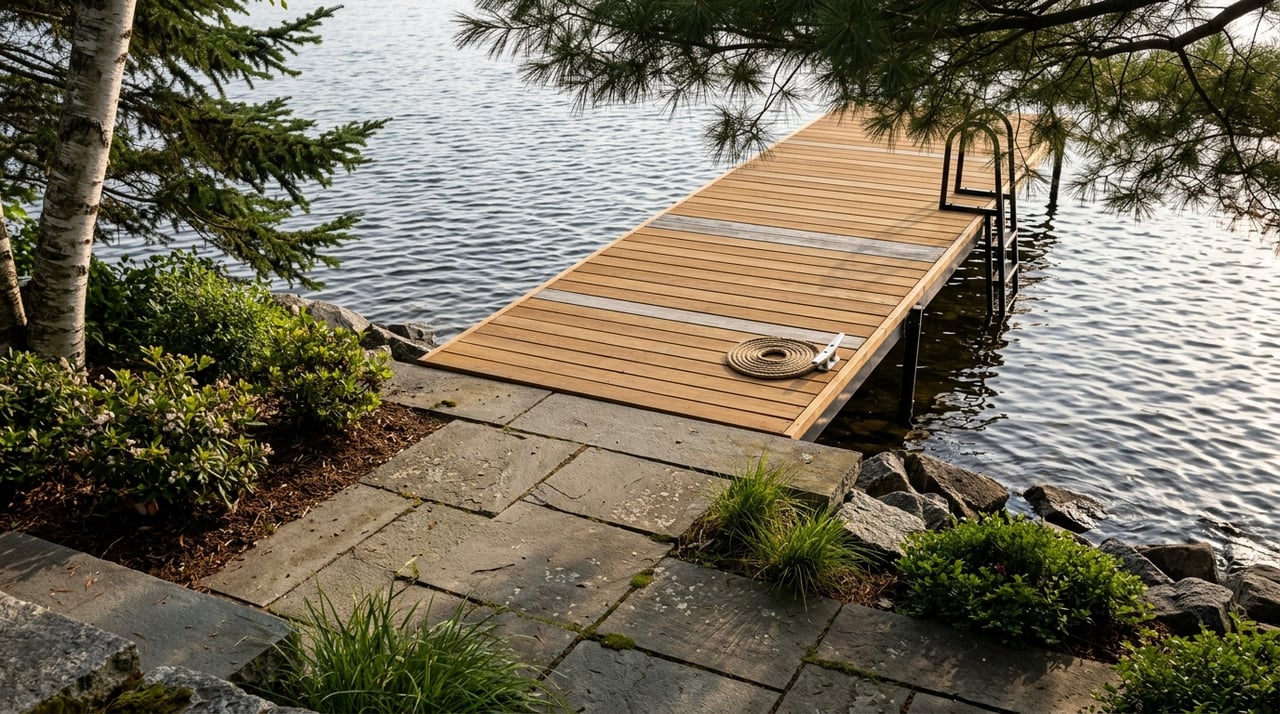
If you are considering future dock work, bank stabilization, or other shoreline improvements, DEC guidance says that proposals involving shoreline work in the Adirondack Park should be reviewed with the Adirondack Park Agency before plans are finalized. For waterfront buyers, this is a key step in understanding the true potential of the property.
Flood Risk and Water Quality Deserve Attention
A beautiful waterfront setting can also come with extra planning needs. FEMA identifies its Flood Map Service Center as the official public source for flood hazard information, so checking flood mapping is a smart part of your review before purchase.
Water quality is also worth understanding. The Lake Champlain watershed program notes ongoing harmful algal bloom concerns in the basin, and Essex County Health says blue-green algae can affect people and animals. If lake access or shoreline enjoyment is a big part of your plan, it helps to go in with a clear picture of seasonal conditions and environmental considerations.
Utilities Can Shape Your Budget Fast
Utility research is one of the most important parts of buying land in Crown Point. The town has a water and wastewater department, posts annual drinking water quality reports, and notes that service-line lead status is unknown until the line material is identified. If a parcel may connect to municipal service, you should confirm availability and the specific requirements.
If municipal service is not available, you may be looking at a private well and septic system. Essex County says its health department is a partial-service local health department, while the New York State Department of Health Saranac Lake district handles individual water and sewage systems and related environmental health work.
NYSDOH advises private well owners to test at least once a year for bacteria and every three to five years for other contaminants, with extra testing after floods or contamination concerns. For a land buyer, that underscores why well and septic feasibility should be part of your pre-closing review, not an afterthought.
Access, Boundaries, and Surveys Are Essential
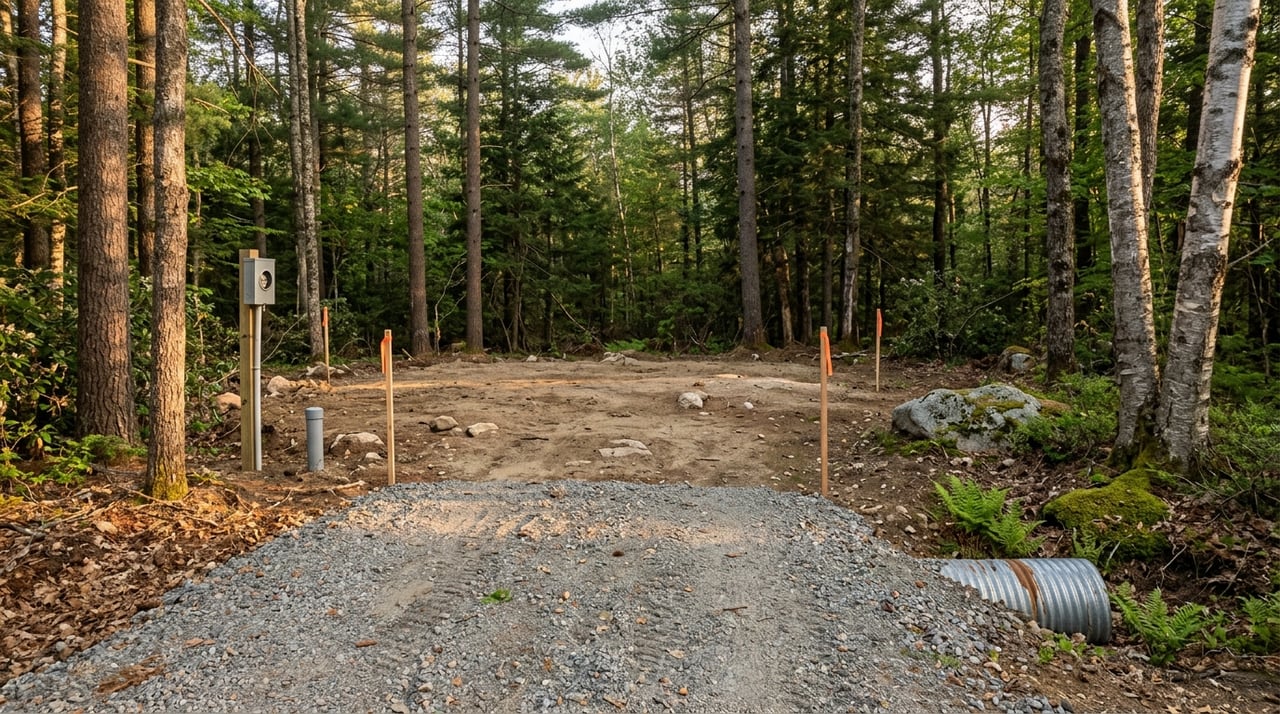
Vacant land often looks simpler than it is. A parcel may appear straightforward, but until you verify access, dimensions, and legal description, you may not fully know what you are buying.
Essex County Real Property Tax Services maintains county tax maps and a GIS database of parcels, which can help with parcel research and boundary review. Still, tax maps are not a substitute for a current survey when precision matters.
Your land due diligence checklist
- Confirm the legal description
- Review lot dimensions and boundaries
- Verify legal and practical access
- Map possible driveway placement
- Check emergency vehicle access
- Confirm utility availability or service needs
- Determine likely well and septic locations
- Review wetlands and flood considerations
- Confirm current permit and use requirements
Budget for More Than the Purchase Price
With land, your total cost is rarely just the contract price. You also need to look at carrying costs, permit fees, future site work, and any studies needed to confirm buildability.
Essex County’s tax-rate resources show that local tax bills can include county, town, school, fire district, and water district levies. Those costs can vary by parcel, so it is worth checking the exact property rather than estimating from nearby listings.
Crown Point’s posted permit fees include a minimum $100 fee for one- or two-family homes, $75 for septic systems, and $50 for foundation-only work. The town also posts a 50% penalty for starting a project without a permit, which makes early planning even more important.
Financing Land Is Different From Financing a House
Many buyers are surprised to learn that land financing often works differently from a standard home purchase. Vacant land can come with a different underwriting process, and your lender may look closely at the property’s intended use, access, and improvement timeline.
Down payment expectations also matter. Consumer guidance in the research notes that larger down payments generally improve approval odds and may lower interest rates, while closing costs still add to the cash needed at closing. If you are buying land now and planning to build later, make sure your financing strategy matches that timeline.
Why Vacant Land Needs More Pre-Closing Review
Buying an existing house lets you evaluate a structure that is already standing. Buying land requires you to confirm what can happen in the future, and that often means more verification before closing.
The key items in Crown Point usually include zoning confirmation, a survey, legal access, utility availability, septic and well feasibility, flood review, wetland review, and a clear financing plan. If any one of those pieces is unclear, your risk can rise quickly.
A Smart Approach to Buying Land in Crown Point
The best land purchases usually start with a clear vision and a patient process. If you know whether you want a seasonal getaway, a year-round home, or a long-term investment, it becomes much easier to rule parcels in or out based on facts instead of emotion.
In a place like Crown Point, local insight matters because each parcel can tell a different story. A property near Lake Champlain may offer stunning potential, but the real opportunity comes into focus only after you understand the site conditions, approval path, and carrying costs.
If you are considering land in Crown Point near Lake Champlain, working with a local advisor can help you ask better questions early and avoid expensive surprises later. When you are ready to explore available parcels and evaluate what fits your goals, connect with Melissa O'Reilly for thoughtful guidance grounded in the Adirondack market.
FAQs
What should you check before buying land in Crown Point?
- You should confirm parcel boundaries, legal access, utility availability, well and septic feasibility, flood risk, wetlands, and current permit or use requirements before closing.
Do waterfront lots in Crown Point need extra review?
- Yes. Lake-adjacent parcels may involve shoreline permits, wetland review, flood mapping, and possible Adirondack Park Agency coordination for certain improvements.
Does Crown Point have town-wide zoning for all land parcels?
- The town site points to a 2022 draft hamlet zoning law for the hamlet area, so you should verify the current status of the specific parcel instead of assuming one town-wide rule set.
How do you research taxes on land in Crown Point?
- Essex County Real Property Tax Services maintains tax maps, GIS parcel data, and tax-rate information that can help you review likely county, town, school, fire district, and water district charges.
Can you connect to municipal water or sewer in Crown Point?
- Some parcels may be in the municipal service area, but availability should be confirmed property by property through the town’s water and wastewater information and local review.
Why is buying land different from buying a home in Crown Point?
- With vacant land, you need to verify future use, access, permits, utilities, environmental conditions, and financing details before closing because there is no existing structure to confirm those questions for you.